


Buy Opdivo (Nivolumab)
Price range: $420.00 through $865.00
Opdivo (nivolumab) is a medication used for the treatment of certain types of cancer.
What is Opdivo (nivolumab) for?
Opdivo (nivolumab) is indicated for the treatment of patients with:
- metastatic melanoma as a single agent or in combination with ipilimumab
- metastatic non-small cell lung cancer (NSCLC) whose cancer progressed on or after chemotherapy
- advanced renal cell carcinoma who have received prior anti-angiogenic therapy
- classical Hodgkin lymphoma that has relapsed or progressed after other treatments
- recurrent or metastatic head and neck squamous cell carcinoma (HNSCC) with disease progression on or within 6 months of receiving platinum-based chemotherapy
- locally advanced unresectable or metastatic urothelial carcinoma following progression on a platinum-containing therapy
- microsatellite instability-high (MSI-H) or mismatch repair deficient (dMMR) metastatic colorectal cancer (mCRC) that has progressed following treatment with a fluoropyrimidine, oxaliplatin, and irinotecan
- hepatocellular carcinoma in patients who have been previously treated with sorafenib
- for the adjuvant treatment of completely resected esophageal or gastroesophageal junction (GEJ) cancer with residual pathologic disease in patients who have received neoadjuvant chemoradiotherapy (CRT).
How does Opdivo (nivolumab) work?
Opdivo (nivolumab) has been designed to attach to a receptor called PD-1, found on certain cells of the immune system called T cells. Cancer cells can produce proteins (PD-L1 and PD-L2) that attach to this receptor, switching off the T cells. By attaching to the receptor, nivolumab prevents cancer cells from switching off T cells, thereby increasing the ability of the immune system to kill cancer cells.
Is Opdivo (nivolumab) approved?
Opdivo (nivolumab) was approved by
- PMDA (Japan)
- on June 2014 for unresectable malignant melanoma
- on December 17, 2015, for NSCLC
- on August 5, 2016, for unresectable or metastatic renal cell carcinoma
- on October 17, 2016, for relapsed or refractory classical Hodgkin lymphoma
- on February 22, 2017, for recurrent or distant metastatic head and neck cancer
- on August 22, 2017, for unresectable advanced or recurrent gastric cancer that has progressed after cancer chemotherapy
- May 27, 2021, for unresectable advanced or recurrent malignant pleural mesothelioma.
- FDA (USA)
- on December 22, 2014, for unresectable or metastatic melanoma
- on March 4, 2015, for metastatic squamous non-small cell lung cancer (NSCLC)
- on November 23, 2015, for advanced renal cell carcinoma
- on May 17, 2016, for classical Hodgkin lymphoma (cHL)
- on November 10, 2016, for head and neck squamous cell carcinoma (HNSCC)
- on February 2, 2017, for advanced unresectable or metastatic urothelial carcinoma
- on August 1, 2017, for microsatellite instability-high (MSI-H) or mismatch repair deficient (dMMR) metastatic colorectal cancer
- on September 22, 2017, for hepatocellular carcinoma (HCC) following prior treatment with sorafenib
- on December 20, 2017, for the adjuvant treatment of patients with melanoma with involvement of lymph nodes or in patients with metastatic disease who have undergone complete resection
- on May 20, 2021 as adjuvant treatment of completely resected esophageal or gastroesophageal junction (GEJ) cancer
- EMA (EU)
- on June 19, 2015, for metastatic melanoma
- on July 20, 2015, for NSCLC
- on February 26, 2016, for advanced renal cell carcinoma
- on October 13, 2016, for relapsed or refractory cHL
- on June 2, 2017, for urothelial carcinoma
- Health Canada on September 25, 2015for:
- previously untreated unresectable or metastatic BRAF V600 wild-type melanoma
- unresectable or metastatic melanoma and disease progression following ipilimumab and, if BRAF V600 mutation positive, a BRAF inhibitor
- melanoma with regional lymph node involvement, in transit metastases/satellites without metastatic nodes, or distant metastases, as adjuvant therapy after complete resection
- locally advanced or metastatic non-small cell lung cancer (NSCLC) with progression on or after platinum-based chemotherapy
- advanced or metastatic renal cell carcinoma (RCC) who have received prior anti-angiogenic therapy
- intermediate/poor-risk advanced or metastatic RCC when used in combination with ipilimumab
- recurrent or metastatic squamous cell cancer of the head and neck (SCCHN) progressing on or after platinum-based therapy.
- TGA (Australia)
- on January 11, 2016, for the metastatic melanoma and NSCLC, and later for advanced clear cell renal cell and relapsed or refractory cHL.
- Medsafe (New Zealand) on April 28, 2016, for:
- unresectable or metastatic melanoma or melanoma with involvement of lymph nodes or metastatic disease who have undergone complete resection
- locally advanced or metastatic squamous non-small cell lung cancer (NSCLC) with progression on or after prior chemotherapy
- intermediate/poor-risk, previously untreated advanced renal cell carcinoma.
- relapsed or refractory classical Hodgkin lymphoma (cHL) after autologous stem cell transplant and treatment with brentuximab vedotin
- recurrent or metastatic squamous cell cancer of the head and neck in adults progressing on or after platinum based therapy
- locally advanced unresectable or metastatic urothelial carcinoma after prior platinum-containing therapy
- hepatocellular carcinoma after prior sorafenib therapy.
How do I take Opdivo (nivolumab)?
The recommended therapy varies for the different indications and depends on whether nivolumab is used alone or in combination with other therapeutics. Complete information about nivolumab dosage and administration for some of the countries of approval can be found in the official prescribing information listed in our references section
Note: Consult your treating doctor for personalised dosing.
Are there any known adverse reactions of Opdivo (nivolumab)?
Common adverse reactions
The most common adverse reactions were:
- fatigue
- rash
- musculoskeletal pain
- diarrhoea
- nausea.
| Quantity |
40 mg/4 mL ,100 mg/10 mL |
|---|

Related products
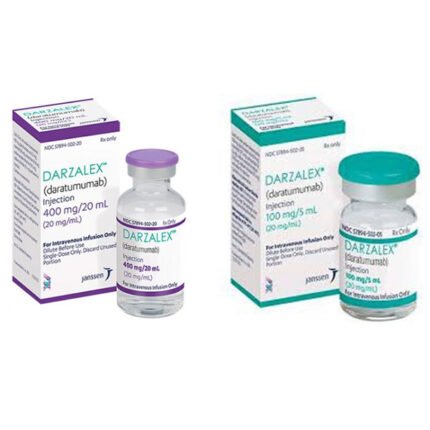
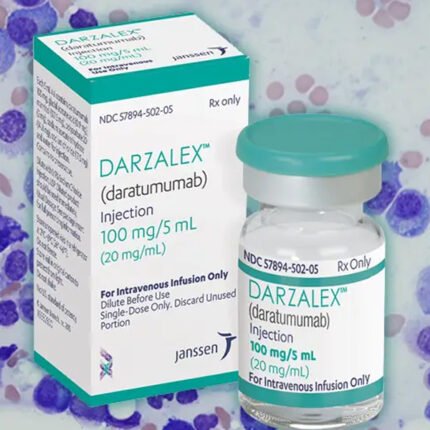
Buy Darzalex (daratumumab)
Who is Darzalex (daratumumab) for?
Darzalex (daratumumab) is indicated for patients with:-
newly diagnosed multiple myeloma who are ineligible for autologous stem cell transplant (first-line treatment). For this indication, it is used in combination with bortezomib, melphalan, and prednisone.
-
multiple myeloma who have received at least one prior therapy (second-line treatment). For this indication, it is used in combination with lenalidomide and dexamethasone, or bortezomib and dexamethasone.
-
multiple myeloma who have received at least two prior therapies including lenalidomide and a proteasome inhibitor (third-line treatment). For this indication, it is used in combination with pomalidomide and dexamethasone.
-
multiple myeloma who have received at least three prior lines of therapy including a proteasome inhibitor (PI) and an immunomodulatory agent or who are double-refractory to a PI and an immunomodulatory agent (fourth-line treatment). For this indication, it is used as monotherapy.
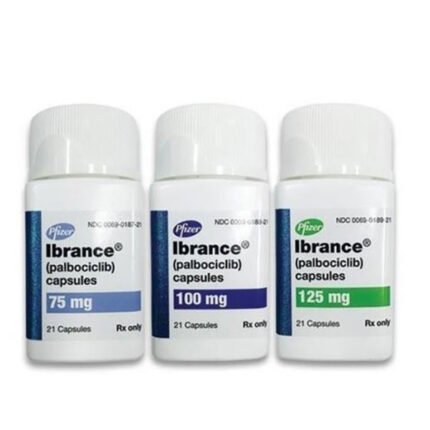
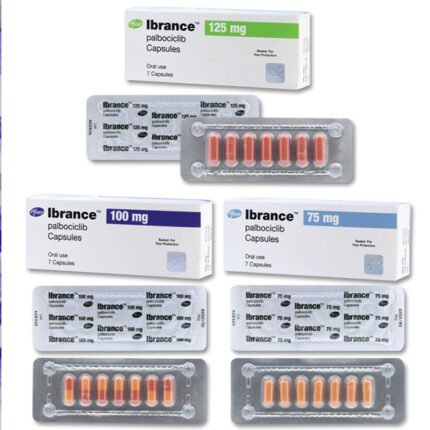
Buy Ibrance (palbociclib)
What is Ibrance (palbociclib) for?
Palbociclib is indicated for the treatment of postmenopausal women with estrogen receptor (ER)-positive, human epidermal growth factor receptor 2 (HER2)-negative advanced breast cancer as initial endocrine-based therapy for their metastatic disease. It is indicated in combination with an aromatase inhibitor (an hormonal therapy) as initial endocrine based therapy in postmenopausal women or fulvestrant in women with disease progression following endocrine therapy.How does Ibrance (palbociclib) work?
Palbociclib is an inhibitor of cyclin-dependent kinase (CDK) 4 and 6.
Before a cell can divide, it has to go through four phases. The first phase is a growth phase (G1-phase), the second a synthesis phase (S-phase), the third another growth phase (G2-phase) and the last phase, where the cell divides (M-phase). Cancer cells divide exceedingly fast, passing through these 4 phases rapidly. Palbociclib blocks the progression from the first G1-phase, into the second S-phase. It does this by inhibiting the cyclin-dependent kinases 4 and 6 (CDK4 and CDK6)—two proteins that are involved in entering the S-phase[1].


Buy Kadcyla (Trastuzumab Emtansine)


Buy Keytruda (pembrolizumab)


Buy Perjeta (Pertuzumab)
What is Perjeta (pertuzumab) for?
Perjeta (pertuzumab) is indicated for the treatment of HER2 positive breast cancer in patients with metastatic cancer or as neoadjuvant treatment for patients with locally advanced, inflammatory, or early stage breast cancer as part of a complete treatment regimen for early breast cancer

Buy Tecentriq (Atezolizumab)


Reviews
There are no reviews yet.